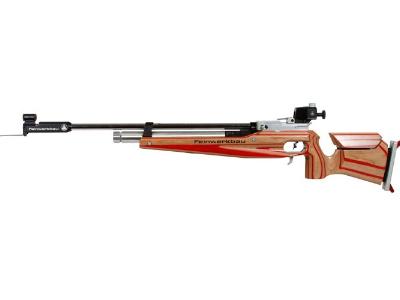
Air Rifle
Versatile air rifle built for target shooting, plinking, or small game – power, accuracy, and fun in every shot.
How to use mil dot scopes on air rifles
Understanding Mil Dot Scopes
Mil dot scopes are specialized optical sights that allow shooters to estimate distance and make precise adjustments for bullet drop and windage. These scopes feature a reticle with dots spaced evenly along the crosshairs, typically calibrated in mils (milliradians). Understanding how to use mil dot scopes on air rifles can significantly enhance your shooting accuracy.
Setting Up Your Air Rifle with a Mil Dot Scope
Before you can effectively use a mil dot scope, proper setup is essential:
- Mounting the Scope: Ensure your scope is securely mounted on your air rifle. Use high-quality rings and bases designed for your specific model.
- Bore Sighting: Bore sighting helps align the scope with the barrel. This initial step saves time during zeroing.
- Zeroing the Scope: Shoot at a target from a known distance (usually 10-25 yards) to adjust the elevation and windage settings until you hit the center of your target.
Using Mil Dot Reticles for Range Estimation
A key advantage of mil dot scopes is their ability to estimate range based on target size:
- Select a Reference Size: Know the approximate height or width of your target. For example, an average adult deer is about 1.5 meters tall.
- MIL Measurement: Measure how many dots tall or wide your target appears in the scope. Each dot represents one milliradian at 100 yards.
- Calculating Distance:
- If your target measures 2 MILs tall and you know it’s about 1.5 meters tall, use this formula: Distance (in meters) = Height of Target (in meters) / MILs measured × 1000.
- This calculation allows you to estimate that if it appears as 2 MILs, then you’re roughly at 750 yards away from it.
Aiming with Mil Dots
The next step in learning how to use mil dot scopes on air rifles involves aiming accurately using the reticle’s dots:
- Shooting Adjustments: After estimating range, adjust for bullet drop by aligning the appropriate mil dot below your intended point of impact based on distance.
- Crosswind Compensation: Use side dots to compensate for wind drift by aiming slightly into the wind direction based on its strength and direction.
Tuning Your Technique
The effectiveness of using mil dot scopes also depends on practice and technique:
- Shooting Position: Maintain a stable shooting position—this could be standing, kneeling, or prone—to ensure consistent results.
- Breathe Control: Practice controlled breathing while taking aim; exhale slowly before squeezing the trigger for better accuracy.
- Distant Practice: Create various distance challenges during practice sessions to improve familiarity with estimating ranges using different targets.
Tips for Better Accuracy
- Regularly check zero after transportation or significant temperature changes—air rifles can be sensitive!
- Consider environmental factors like humidity or altitude which may affect trajectory—adjust accordingly!
- Use quality ammunition suited specifically for your air rifle to achieve optimal performance! CONTACT US YOUTUBE